


Adaptive Conservation in Action: Reintroducing California Red-Legged Frogs
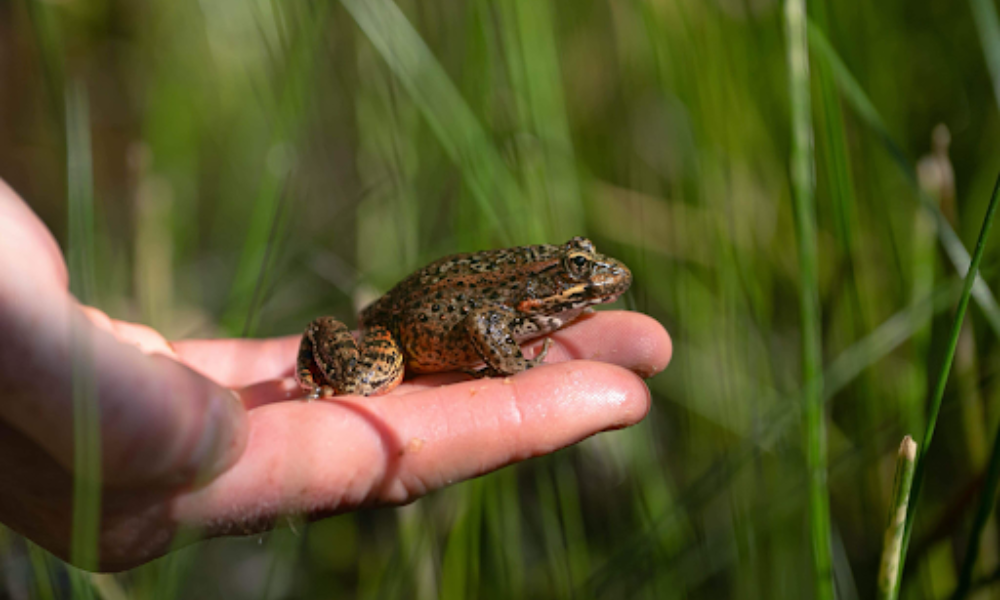
Conservation banks incentivize protecting lands and the special-status species that inhabit them. At the Ridge Top Ranch Wildlife Conservation Bank (Bank) in Solano County, WRA’s partnership with the San Francisco Zoo (Zoo), Solano Land Trust (SLT), and U.S. Fish and Wildlife Service (USFWS) is bringing threatened amphibians back from the brink. The federally threatened California red-legged frog (Rana draytonii, CRLF) is an iconic California amphibian that faces range-wide declines and ongoing and emerging threats. Once common, these frogs persist as remnant populations in coastal California and the Sierra Nevada mountains.
Bank Overview
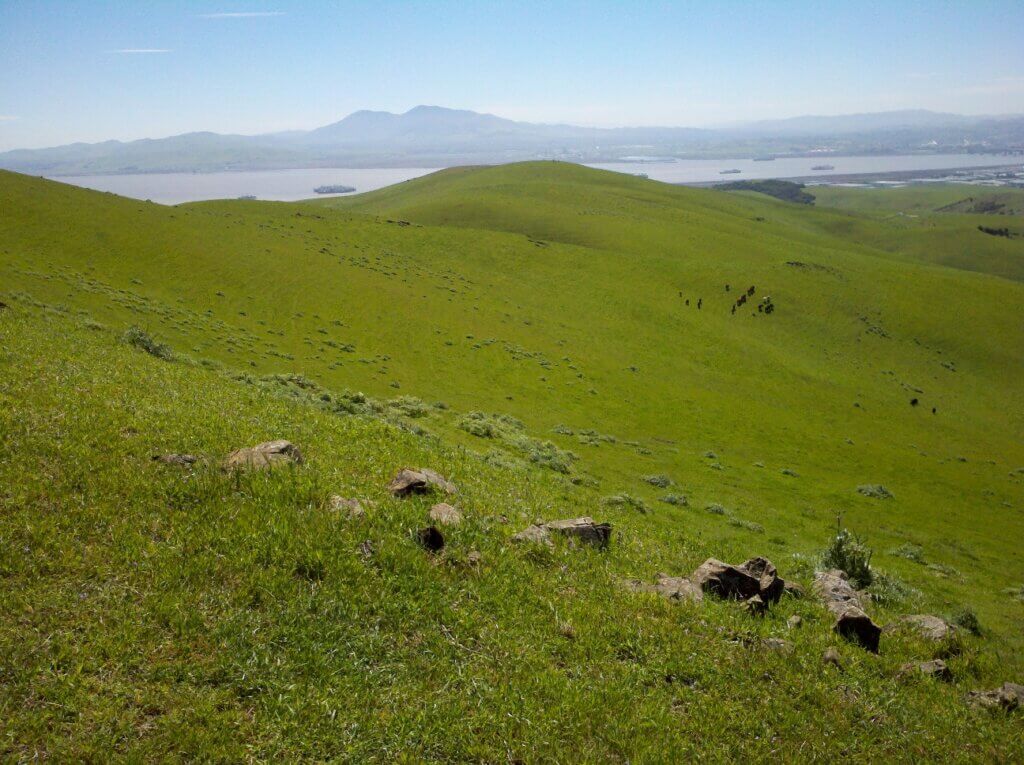
Situated in southern Solano County, Ridge Top Ranch is a 750-acre conservation bank encompassing grasslands, oak woodlands, perennial ponds, and streams supporting special-status species, including the Callippe silverspot butterfly (Speyeria callippe callippe, CSB) and CRLF. The Bank sells mitigation credits to offset for impacts that occur elsewhere. This concept can incentivize private landowners to conserve high-value habitats, and enhance degraded lands to create ecological uplift. Uniquely, Ridge Top Ranch has advanced CRLF recovery by enabling recolonization of their historic range rather than merely protecting remnant populations. Starting in 2010, WRA restored two stock ponds and implemented a first-of-its-kind egg translocation from a neighboring property, establishing a self-sustaining CRLF population within USFWS-designated critical habitat. WRA monitors the site to ensure long-term population vigor.
A tale of two ponds
Very different stories emerged from the two restored ponds. In one, the frogs have successfully bred every year since 2014. The other pond encountered drought-related drydowns in 2015 through 2017, and eventually lost its frog population. Working with the land manager and Bank sponsor, WRA improved habitat and set out to reestablish frogs in the second pond. WRA found a key partner in the San Francisco Zoo’s Amphibian Conservation Program, which brings world-class expertise and a proven track record of raising and reintroducing threatened frogs, including in Yosemite and Sequoia & Kings Canyon National Parks.
In early 2024, WRA and Zoo staff collected a single egg mass from the thriving pond and raised the tadpoles at the Zoo’s facility. Despite husbandry methods that typically result in very high survival, only about 10 percent of the juvenile frogs were healthy enough for release in fall 2024. Careful daily monitoring revealed deformities and cannibalistic behaviors.
While cannibalism is well-documented in amphibians, it is uncommon in CRLF. Further scrutiny offered a hypothesis: the original population at Ridge Top Ranch came from just four egg masses introduced more than a decade ago, creating a genetic bottleneck. With half of those lineages lost during earlier droughts, inbreeding without supplemental immigration further reduced the frogs’ resilience. Pathology by the University of Illinois supported these findings, highlighting the critical role of genetic diversity in long-term species recovery.
2025 – A New Hop
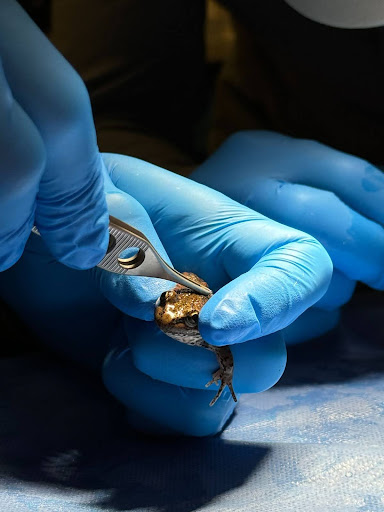
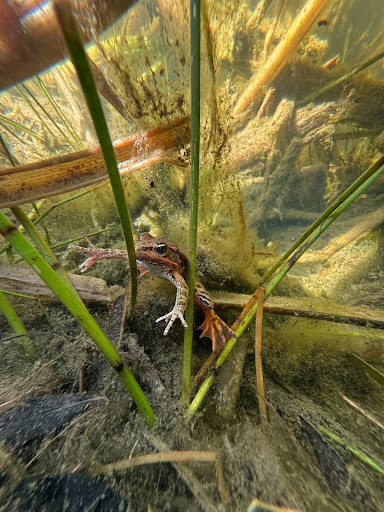
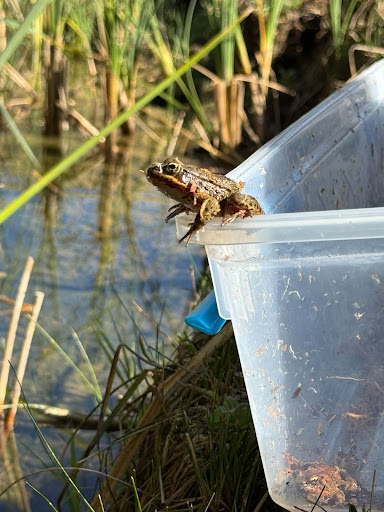
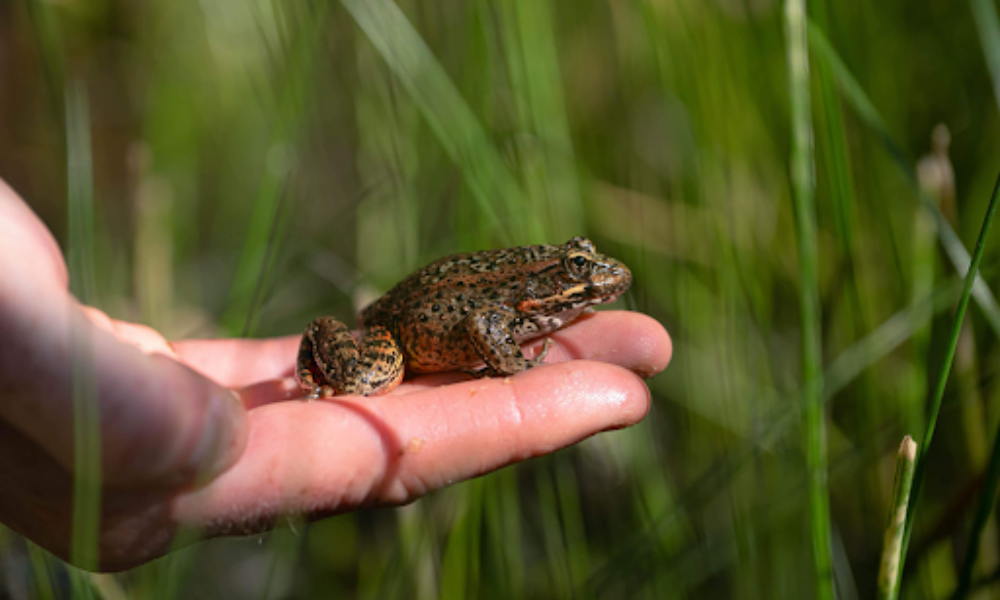
In 2025, the project team took a fresh look at strategy and next steps. Working closely with USFWS and Zoo staff, WRA received approval to collect CRLF eggs from two sources: a robust population on private land in San Mateo County and the original population at Ridge Top Ranch. The goal was to raise both groups side-by-side under identical, carefully controlled conditions to see whether the 2024 challenges would repeat—and to help determine the most appropriate release locations.
Between winter rainstorms, WRA and Zoo staff collected egg masses from both sites. As the frogs developed, a clear pattern emerged. Frogs from Ridge Top Ranch again showed low survival and developmental challenges, pointing to a genetic cause. In contrast, the San Mateo frogs thrived, with high survival rates consistent with the Zoo’s long history of success with the species. In fact, there were enough animals to augment CRLF at known breeding sites in southern Solano County.
WRA and USFWS staff approached SLT, which stewards more than 25,000 acres of protected land, to identify an additional suitable release site. The team also coordinated with a private landowner to return frogs to the original donor ponds from which Ridge Top Ranch frogs had been collected in 2012 and 2013.
In October, representatives from WRA, the Zoo, and SLT released a total of 549 frogs at three locations in southern Solano County. This included 225 frogs—mostly from the San Mateo population—at Ridge Top Ranch; another 225 frogs (about two-thirds San Mateo and one-third Ridge Top) at the nearby private donor pond; and 99 frogs at one of the SLT–owned properties. To support ongoing monitoring, the team installed an audio recorder to monitor the frog community by collecting acoustic data on their vocalizations.
Building on this momentum, the partnership aims to reintroduce frogs to additional local ponds and continue monitoring in the years ahead. This effort reflects WRA’s Vision in action—bringing together public agencies, nonprofit partners, and private landowners to achieve meaningful conservation outcomes. What began at Ridge Top Ranch has expanded across neighboring lands, creating a regional coalition committed to CRLF recovery.
Contact Us
Need wildlife support for your project? Our experts are ready to help.