



From Coast to Foothills: WRA Wraps Up Three Multi-Benefit Restoration Projects
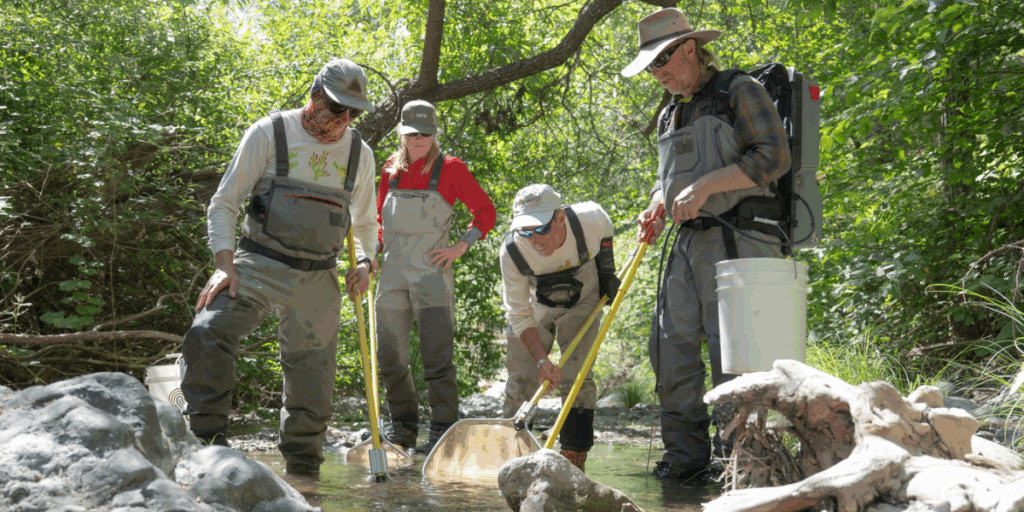
With the close of the 2025 seasonal work window to protect migrating fish and water quality, three key WRA restoration projects wrapped up successfully ahead of winter rains. Along with project sponsors and partners, WRA celebrates the restoration of crucial fish and wildlife habitat in diverse regions and habitats of California.
Marin County Parks | Bolinas Lagoon Wye Wetlands Restoration

At the northern end of Bolinas Lagoon, an internationally recognized tidal estuary located 15 miles north of San Francisco, WRA’s design for a long-planned wetland and stream restoration project was constructed, with an astounding 10,000 native plants placed carefully in the ground as a final step following two years of construction work. This multi-benefit project, led by Marin County Parks, included reconnecting Lewis Gulch Creek to its historic floodplain and alluvial fan, decommissioning and removing the Bolinas-Fairfax “Crossover Road” to restore a forested wetland, and realigning Olema-Bolinas Road with a new bridge designed to accommodate a 100-year flood event, predicted sea level rise, and scour forces from a large tsunami.
The project delivers wide-ranging ecological and community benefits, including restored migratory pathways and rearing habitat for threatened steelhead (Oncorhynchus mykiss) and endangered coho salmon (Oncorhynchus kisutch), improved hydrologic connectivity, and greatly improved climate resilience and traffic safety across a roadway that was once frequently flooded.
WRA staff worked closely with Marin County Parks to develop engineering designs that reflected community input from stakeholders over many years. This collaboration led to extensive project modeling, environmental and cultural studies, and complex permitting from state and federal authorities. Now, the many organizations and individuals behind this restoration effort welcome the return of a lush, resilient landscape—one that makes room for native wildlife and people alike while strengthening the area’s ability to adapt to climate change. In the coming years, WRA biologists will closely monitor plant establishment to ensure the project’s ecological goals are met.
Napa County Resource Conservation District | Sulphur Creek Fish Passage Restoration

The Napa River watershed is home to high-quality habitat for steelhead and Chinook salmon (Oncorhynchus tshawytscha), but fish passage barriers have long blocked access to the upper portions of tributaries where crucial cold water habitat persists through hot and dry summer months. Sulphur Creek, which drains the east side of the Mayacama Mountains and joins the Napa River near the town of St. Helena, has had very limited access by native anadromous fish since a concrete bridge with abutments that encroach on the stream channel was installed in the 1920s. A 2002 attempt to improve passage by adding a fish ladder had ultimately been unsuccessful, and the barrier needed to be removed to restore access to more than 3 miles of habitat.
Working closely with partners including the Napa County Resource Conservation District (Napa RCD), California Department of Fish and Wildlife (CDFW), Caltrout, and private landowners, WRA’s team developed the restoration design and obtained final permits for a new bridge and natural channel along an 800-foot reach of Sulphur Creek. After months of working through a variety of complex project variables, with multiple relocations of aquatic life and other challenges, a new bridge was constructed and the old bridge, abutments, and large concrete apron were demolished and removed. The nonfunctioning fish ladder was removed and the streambed rebuilt at a grade allowing for upstream and downstream migration of fish, also allowing gravel, boulders, and wood to move through the system. The transformation is dramatic: Sulphur Creek now flows freely, and steelhead, salmon, and native amphibians can once again thrive throughout this watershed.
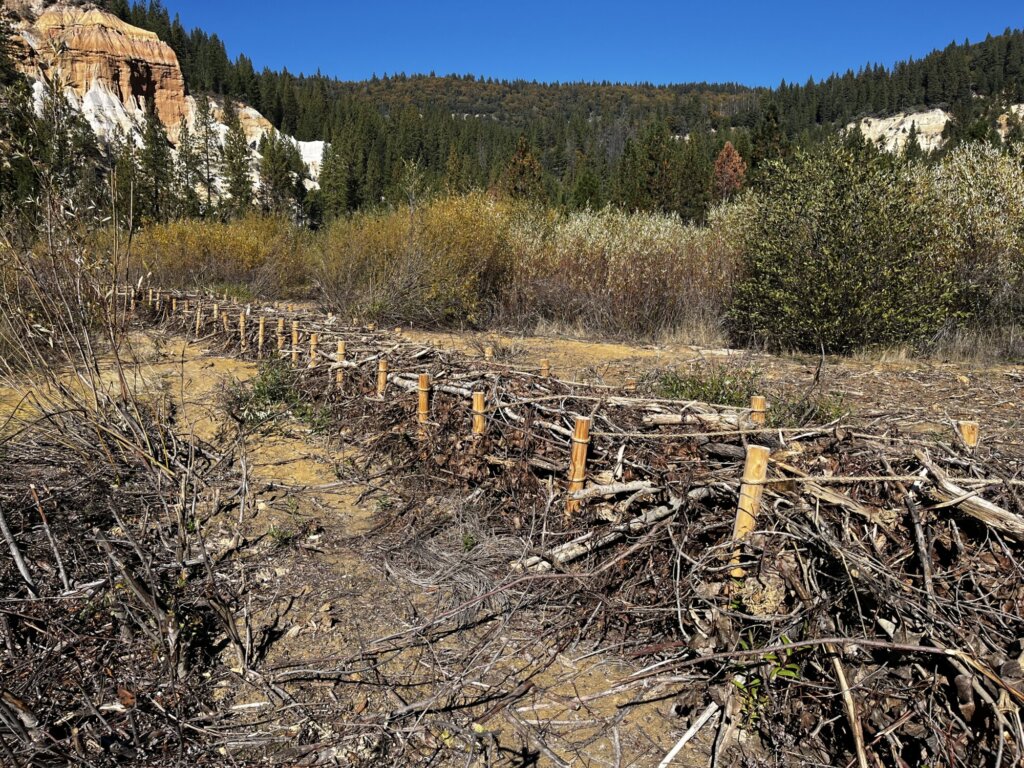

In the Sierra foothills 20 miles east of Nevada City, California State Parks has completed the third and final year of construction on a multi-benefit restoration project at Malakoff Diggins State Historic Park. The park’s dramatic landscape bears the legacy of 1800s hydraulic mining, which carved an immense pit into the mountainside, now a treasured feature of the state park, but one that has long posed sediment and erosion challenges. As part of a team led by WSP, WRA supported the project with biological surveys, regulatory permitting, and compliance monitoring during construction.
To reduce sediment transport from the historic mining pit, the project team installed a series of sediment control structures made of rock, soil, and native woody material across the forested pit floor. These features slow surface runoff, allowing sediment to settle before water reaches a drain tunnel to flow downstream to nearby creeks and eventually the South Yuba River. The design includes an engineered wall around the tunnel entrance to prevent direct runoff, raising water levels in the pit’s ponds, increasing storage capacity and further improving sediment settling.
As groundwater levels and soil moisture increase, conditions are expected to improve for native willow species within the pit. To enhance this habitat, more than 1,100 willow poles were planted in November to expand and densify the willow forest. These willows provide important migratory habitat for the endangered little willow flycatcher (Empidonax traillii), which WRA biologists documented in the park during annual surveys.
Additional habitat enhancements include the removal of non-native American bullfrogs (Lithobates catesbeianus) from aquatic areas, supporting long-term recovery goals for the Northwestern pond turtle (Actinemys marmorata) and California red-legged frog (Rana draytonii). As part of this effort, WRA wildlife biologists deployed acoustic monitoring technology to better understand bullfrog breeding cycles and more precisely time management actions—maximizing ecological benefits while minimizing disturbance.
Need Help with Your Next Project?
WRA’s integrated team of biologists, planners, designers, and regulatory permitting specialists is ready to help you on your next habitat restoration project! To learn more about our ecological restoration services, visit our market page.