



Buzzing with Impact: Supporting Insect Pollinators and the Local Community
Bees, flies, butterflies, moths, and beetles – what do all these insects have in common? They all serve important roles in supporting global crop production through pollination! Despite their importance, insect pollinator abundance has declined due to habitat loss and fragmentation, pesticide use, parasites and pathogens, loss of genetic variation, and many other threats. To share opportunities to improve habitat quality for local pollinators, WRA entomologist Rei Scampavia, PhD, partnered with Urban Tilth to lead a half-day pollinator workshop as part of the Orchard for ALL! program on April 6, 2026.


Urban Tilth is a Richmond, California-based nonprofit that inspires, hires, and trains local residents to cultivate agriculture, feed the community, and restore relationships to land to build a more sustainable food system, within a just and healthier community. As part of their Orchard for ALL! program, Urban Tilth hosts four to eight young adult Richmond residents as apprentices for a six-week training. The Orchard for ALL! six-week training provides apprentices with hands-on experience with fruit tree care, environmental justice, food justice, storytelling, and food sovereignty while working alongside Urban Tilth staff to steward the land and cultivate resources for the Richmond community.
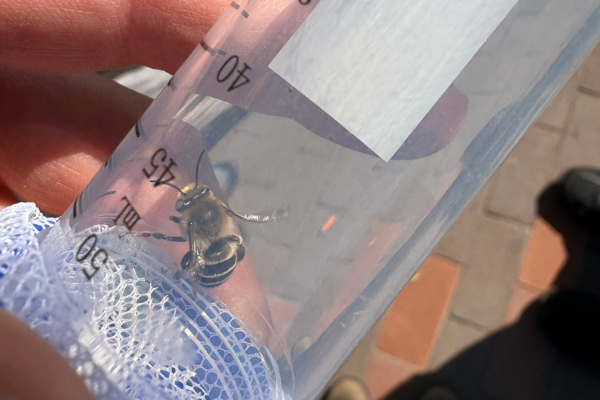
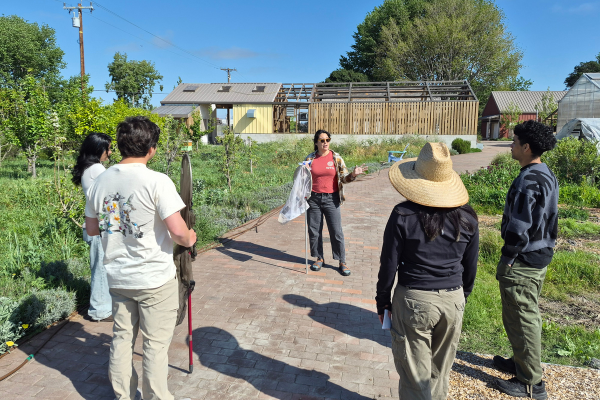
At Urban Tilth’s North Richmond Farm, Rei’s workshop focused on pollinator diversity, causes of pollinator decline, and strategies for managing urban farms to support pollinators. During the hands-on portion of the course, Rei was joined by WRA biologists Mari Ferlin, Richard Hasegawa, and Priscilla Ta, for a crash course in pollinator identification. Despite high winds, participants identified insect pollinators from over eight different genera. Rei, Mari, Richard, and Priscilla also guided participants in an exercise to quantify pollinator habitat quality on the North Richmond Farm, including identifying areas for improvement. As the workshop came to a close, participants engaged in discussion and drew on their knowledge of local lands to determine how best to enhance habitat and support more insect pollinators on the Farm.

Rei Scampavia is a biologist at WRA with over 17 years of experience studying, monitoring, and exploring California’s diverse ecosystems. At WRA, she conducts invertebrate surveys, pollinator habitat assessments and monitoring for protected and native species, and provides habitat enhancement recommendations for projects with a pollinator habitat component. Her doctoral dissertation assessed the impacts of agricultural intensification on native and managed bee reproduction in the California Central Valley.