



The Bee (and Butterfly) Effect: Supporting Pollinators through Education and Local Action
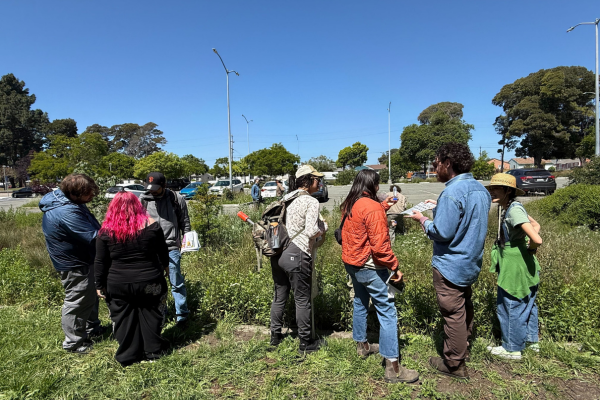
The word “conservation” may evoke images of large-scale restoration efforts in uninhabited areas, but meaningful actions can begin much closer to home. Insect pollinators are essential to the health of many of California’s terrestrial ecosystems, but many pollinator species are currently in decline. In the face of threats such as climate change, habitat loss and fragmentation, and pesticide use, providing habitat for pollinators in urban environments is one of the most effective ways to help pollinator populations thrive. On April 29, 2026, WRA entomologist Rei Scampavia, PhD, partnered with The Watershed Project to lead a half-day pollinator workshop for The Watershed Project staff and interns in the Green Collar Corps program at the UC Berkeley Richmond Field Station and the Booker T. Anderson Community Center in Richmond, California.



The Watershed Project is a Bay Area nonprofit that aims to engage local communities in learning about and protecting local watersheds. The Green Collar Corps, one of many programs organized by The Watershed Project, is a 9-month paid internship that connects young adults from underrepresented communities with career pathways in conservation and environmental justice. Interns choose from several pathways in the environmental sector and develop professional skills through a wide range of hands-on experiences, while learning about and contributing to The Watershed Project’s other conservation endeavors.
Rei started the workshop with a presentation on pollinator ecology, the importance of pollinators in terrestrial ecosystems and as part of food production, and the many benefits of pollinator habitat creation in urban environments. In the field, Rei was joined by WRA biologist Richard Hasegawa, for a hands-on review of pollinator identification and observation. Participants identified over 12 genera of insect pollinators within a bioswale restored by The Watershed Project in 2023 and a pollinator garden created in 2024. The workshop concluded with a discussion of the importance of post-restoration monitoring, ways to continue to learn about pollinators and other insects, and opportunities to participate in citizen science insect monitoring efforts.
Read more in The Watershed Project’s newsletter, Ebb & Flow.

Rei Scampavia is a biologist at WRA with over 17 years of experience studying, monitoring, and exploring California’s diverse ecosystems. At WRA, she conducts invertebrate surveys, pollinator habitat assessments and monitoring for protected and native species, and provides habitat enhancement recommendations for projects with a pollinator habitat component. Her doctoral dissertation assessed the impacts of agricultural intensification on native and managed bee reproduction in the California Central Valley.