


Three Woodrat Subspecies Removed from CDFW Special Concern List
In the spring of 2026, the California Department of Fish and Wildlife (CDFW) updated the list of Species of Greatest Conservation Need (SGCN) to remove the Species of Special Concern (SSC) designation for three woodrat subspecies: the San Francisco dusky-footed woodrat (Neotoma fuscipes annectens), the Monterey dusky-footed woodrat (Neotoma macrotis luciana), and the San Diego desert woodrat (Neotoma lepida intermedia)[1]. This change has significant implications for projects of these three subspecies.
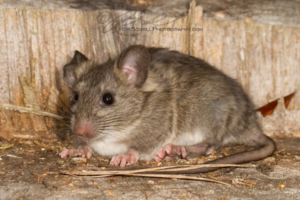
These three woodrat subspecies are locally abundant in suitable habitat. The San Francisco and Monterey dusky-footed woodrats are commonly found in woodland and chaparral habitats, particularly along riparian corridors, while the San Diego desert woodrat favors rockier terrain within chaparral, sagebrush, and desert scrub. In addition, all three subspecies have a high tolerance for urban habitats. Figure 1 below provides the ranges for each subspecies.

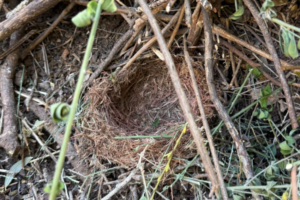
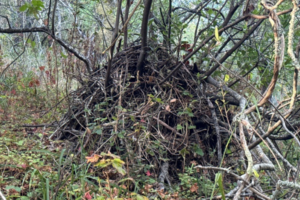
Woodrats build large, dome-shaped middens (i.e., nests) out of sticks and other vegetative debris. Middens may be built on the ground or in trees and can remain intact for years after they are abandoned.
[1] The riparian woodrat (Neotoma fuscipes riparia), found in portions of San Joaquin and Stanislaus counties, retains its SSC designation and remains listed as endangered under the Endangered Species Act of 1973, giving it greater protections than the three subspecies discussed in this article.
SSC Status
The prior SSC status of these woodrat subspecies often placed regulatory constraints on proposed projects, as impacts to animals designated as SSC must be included in California Environmental Quality Act (CEQA) analyses and included in the project’s CDFW Lake or Streambed Alteration Agreement (LSAA). Additionally, the potential presence of these subspecies on a proposed project site could limit the availability of certain CEQA categorical exemptions, which require project sites to have no value as habitat for endangered, rare, or threatened species. Where woodrat habitat is present, such a project may no longer qualify and would instead require a more robust CEQA analysis.
Typical protection measures for woodrats in regulatory documents begin with a pre-construction survey for middens. Middens are presumed active (since occupancy cannot be determined without employing invasive methods), so a protective buffer is implemented around any middens found within or in the immediate vicinity of the project area. If middens are within a project area and cannot be avoided, dismantling and relocation is required. Dismantling is a resource-intensive process which requires approved biologists equipped with specialized personal protective equipment.
Project Impacts
Due to the removal of the SSC designation, impacts to these three woodrat subspecies are unlikely to be considered significant under future CEQA analyses, and future LSAAs may not include protective measures. However, projects with permits and/or published CEQA documents issued before the SSC designation was removed should not be affected.
Contact Us
WRA has decades of experience with permitting, CEQA compliance, and wildlife studies, including work within the ranges of these woodrat subspecies. For more information about regulations involving woodrats or other special-status species, please reach out via our contact form.